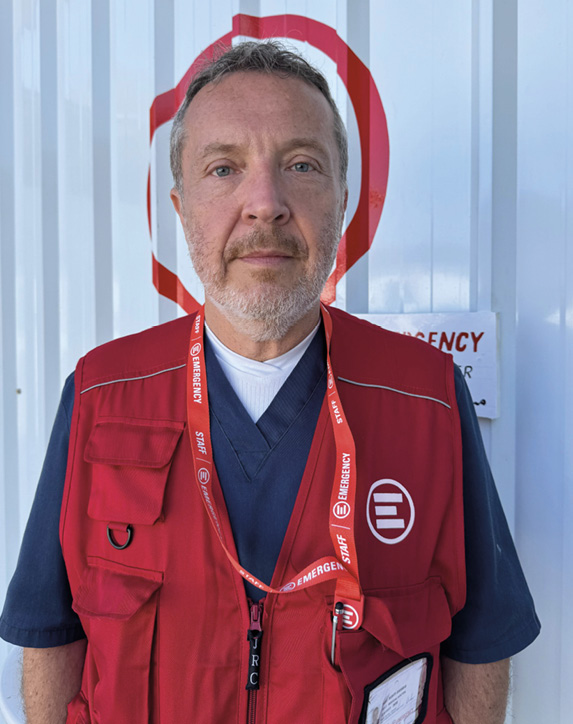
After almost a year spent in Emergency’s clinic in Palestine, Giorgio Monti, a doctor at Bologna’s Sant’Orsola Hospital, has seen and experienced all the horrors of a war that seems to have no end. We thank him for the time he devoted to us.
You have been in Palestine since October 2024. How has the situation changed since then?
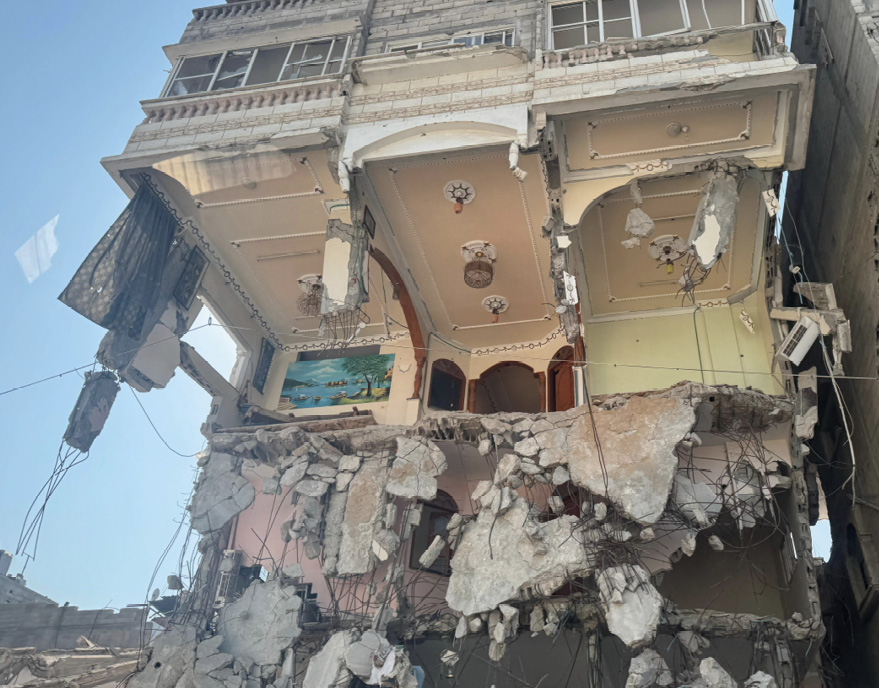
There have been many changes. When I first arrived, there were constant military actions and bombardments, so, for security reasons, there were many restrictions, including on movements. The population of Rafah (a city completely destroyed) was displaced entirely into the “humanitarian” zone, as were many inhabitants of the cities of Gaza and Khan Younis. The cities were heavily damaged, but a few previously damaged hospitals managed to stay open. The residential areas were camps hastily built with wooden poles and plastic sheets after rapid escapes. There was no way to plan the building of kitchens and bathrooms or to have a supply of drinking water. Living conditions were hard for everyone, especially for the less fortunate and for poor people who took refuge on the Al Mawasi coast. When winter arrived, they were the ones who suffered the most, and some children even froze to death. In this zone, while waiting for permission to build a new clinic, we began working with a local organization to manage a primary care facility. In January we also opened “our” clinic. During this time, a cease-fire agreement was reached, but was breached in March. At the same time, the entry of foodstuffs and medical materials was blocked at the border. Living conditions rapidly got much worse due to a lack of medicines, food, and drinking water, wounds caused by military actions, and the progressive destruction of healthcare facilities such as clinics and hospitals. The number of people coming to our clinic progressively increased. Constant pleas to open the borders and stop the bombardments went unanswered, and so prices for the few products remaining in stores became prohibitive: flour was 20 dollars per kilo, tomatoes 15 dollars, eggs 5 dollars each, and no meat or fresh fruit. Illnesses caused by poor diet and hygiene, such as gastroenteritis and scabies, increased rapidly. In May, the ground offensive on Khan Younis forced more people to seek refuge in the “humanitarian” zone, which worsened living conditions. Malnutrition (previously unknown in Gaza) became a scourge until August, when the World Health Organization (WHO) declared a state of famine. In September, when military actions focused on Gaza City (where 90,000 people live), there was no more room for the hundreds of thousands of people who still tried to find to find shelter there, increasing the population density to incredible levels: 11 times that of cities like Milan. In October, the announcement of a cease-fire lit a light at the end of the tunnel, but at the time of this writing it’s still too soon to know if the promise will be kept.
What does Emergency’s clinic do?
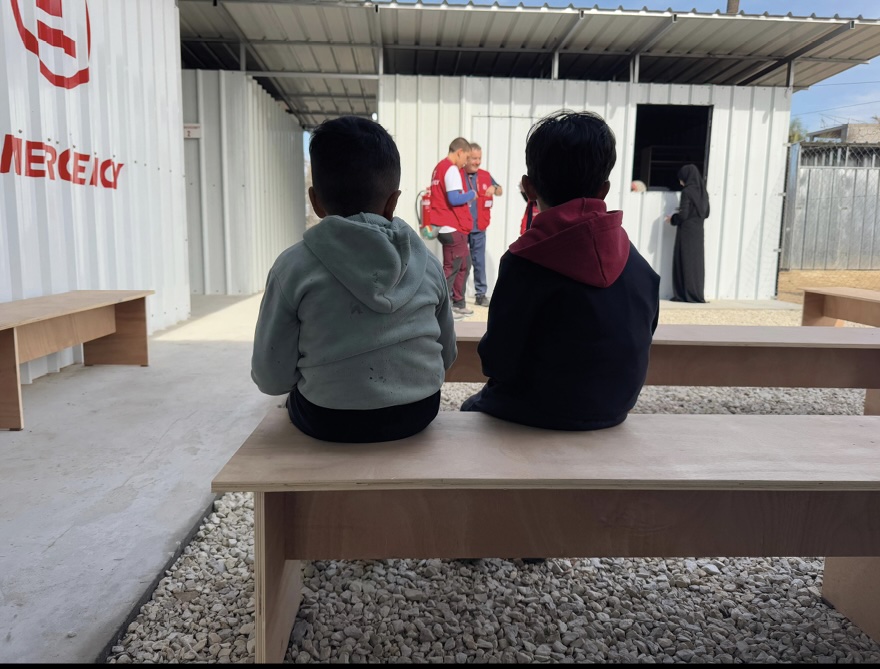
Emergency’s clinic in Al Qarara (Khan Younis) is divided into several sections: an Emergency Room where we stabilize the wounded or the unstable sick; a medical treatment room where we also see surgery patients from other centers; 4 primary care clinics for acutely ill patients, mainly minors with respiratory diseases, gastrointestinal infections, skin infections, and scabies and lice infestations. The chronically ill are adults and elderly patients suffering from arterial hypertension, cardiovascular diseases, and diabetes mellitus. In the family clinic we provide maternal and childhood health counselling and support family planning systems. The obstetrician and gynecologist check women during pregnancy and nursing. In collaboration with the Health Ministry, we have days dedicated to vaccinations for newborns and school-age children. In collaboration with UNICEF we do nutritional screenings, especially of children and of women during pregnancy and nursing. Many show clinical signs of malnutrition, and are treated by our staff with weekly visits and given therapeutic food and supplements.
What do you hope for the future of the fragile, the children who survive?
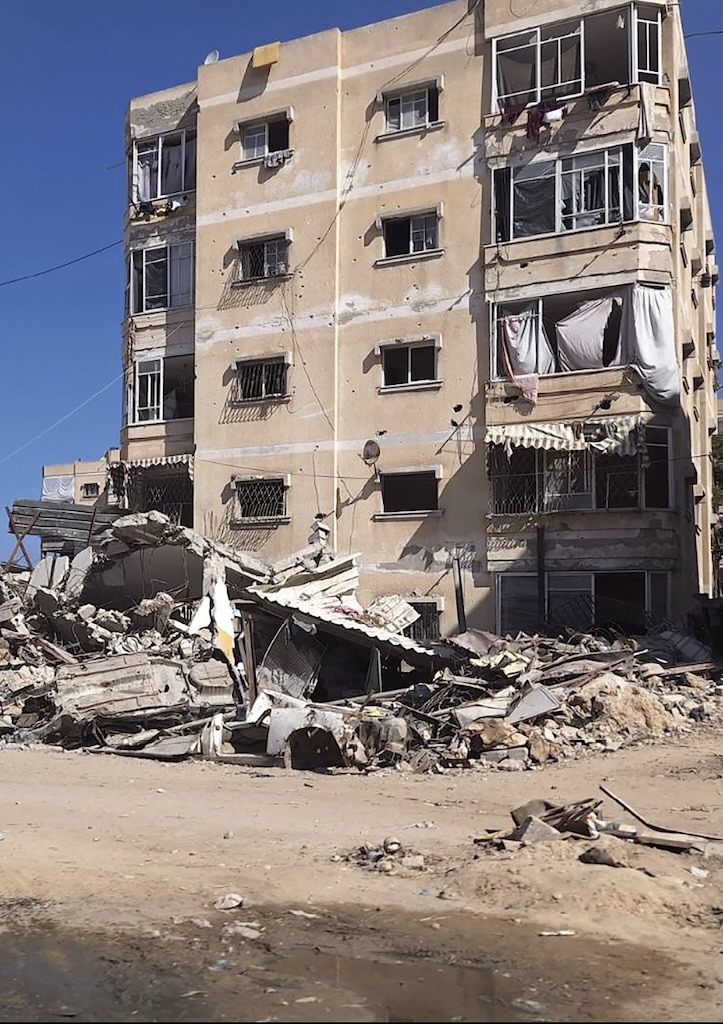
It will be very hard for everyone to go back to a life that is not just possible, but also decent. 90% of homes, streets, water and power distribution systems have been seriously damaged. As always, the most fragile suffer the most. It is estimated that it will take up to 20 years to restore destroyed infrastructures. Children have no schools or places to meet or play, and let’s not forget that about 10% of the bombs dropped are unexploded and extremely dangerous, especially for children, who are curious and might mistake them for toys.
Where do you and your colleagues at Emergency find the energy and courage to face these dramatic situations?
Some days are difficult, with a strong emotional toll, but we’re experts and trained to handle them. Our motivation, along with the experience accumulated by the entire Emergency family over 30 years of commitment in war and disaster zones where violence is unfortunately a daily occurrence, supports us and helps us find answers that may seem exaggerated. Also, the support we receive from donations and letters of appreciation is deeply felt. It confirms that it’s important to be among those who understand the values of solidarity and assistance that we’re trying to spread in the name of all.
Is there something we at home can do to help?
Above all, I’d like to thank everyone who, like you, is interested in what’s happening. It’s important to remain aware of the gravity of the situation. On a practical level, people can support us economically with donations via the channels that Emergency provides.
How does this war, which seems like a biblical Apocalypse, differ from those you have experienced in the past?
Wars are always the wrong ways to resolve disputes. The suffering of civilians is an unacceptable price. In this war, there is maximum persecution of the civilian population, with systematic destruction of buildings, homes, hospitals, and schools. In every war, people try to escape, creating waves of refugees seeking shelter, but the Gaza Strip is closed. There are no safe zones. No one is able to escape, and this has increased the number of victims and the agony. There are families that have assembled and disassembled their makeshift tents up to 10 times, driven away by tanks or by frequent military attacks, and even the so-called humanitarian zones have been bombarded. Everything here is amplified by this constant succession of fear, wounded people, violence, and repeated attempts to escape alternating with the certainty of once again being in danger.
 Italiano




.png "Aderente alla Consulta tra le Antiche Istituzioni Bolognesi")