The AMGO conference was overflowing with enthusiastic professionals and operators.
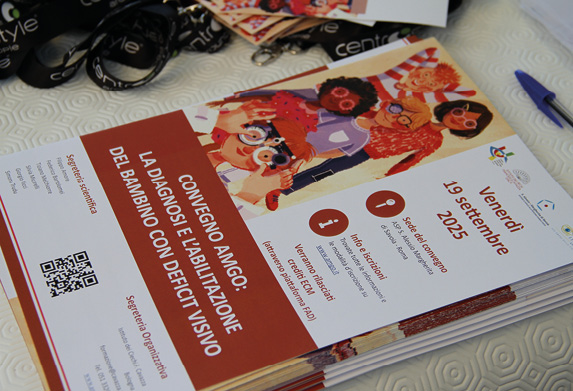
"Diagnosis and care of children with visual impairment,” held in Rome last September 19 at ASP S. Alessio Margherita di Savoia.
The event was organized by the Francesco Cavazza Institute for the Blind, the Italian Union of the Blind and Partially Sighted, and ASP S. Alessio Margherita di Savoia, sponsored by the IAPB Italia ETS Foundation, and united experts from all over Italy for a day of training, discussion, and sharing.
A meeting to look beyond visual impairment.
The conference had an ambitious goal: investigate early diagnosis and the care of blind or visually impaired children, promoting the culture of preventive and multidisciplinary action.
The Francesco Cavazza Institute for the Blind knows this subject very well: for years, it has offered services for the evaluation of visual function, early care, and educational support for children and families in close collaboration with schools, therapists, and specialists.
The rich and dynamic program was designed to integrate the many professional roles involved in the growth of visually-impaired children, including ophthalmologists, orthotists, opticians, child neuro-psychiatrists, and teachers.
Training, experience, new technologies.
.
The morning was dedicated to workshops, which generated great interest and participation. They discussed technologies, self-sufficiency, early visual screening of children 0-3 years of age, and inclusive programs for school age, including in the presence of multiple disabilities.
There was also important focus on cerebral visual impairment (CVI), a complex condition that is increasingly diagnosed and that requires an integrated and interdisciplinary rehabilitative approach.
And the importance of support to families in the daily management of visual impairment.
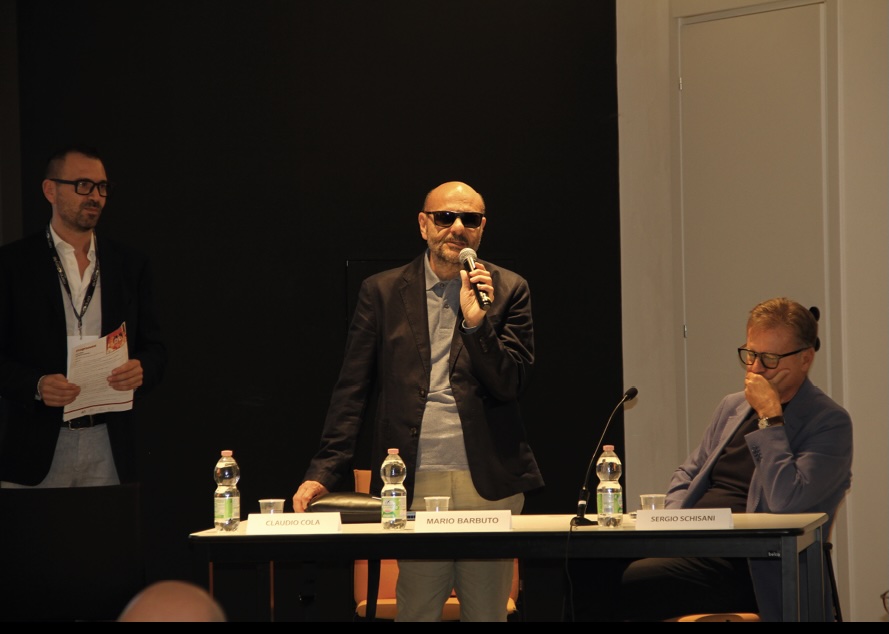
A valuable opportunity not only to be updated, but also to learn about good practices and physical tools to improve the quality of life of children and their parents.
In the afternoon, the complete session offered an overview on the causes of visual impairment in childhood, on the impact of visual disorders on neurodevelopment, and on strategies to prevent myopia, increasingly common even among the very young.
There were numerous round tables at which specialists discussed subjects such as optical correction and pediatric strabismus, childhood nystagmus, anti-amblyopic treatments, and assessment of childhood disability.
These lively and constructive dialogs united medical, educational, and social skills with a single goal: ensure the best opportunities for growth and participation to children with visual impairment.
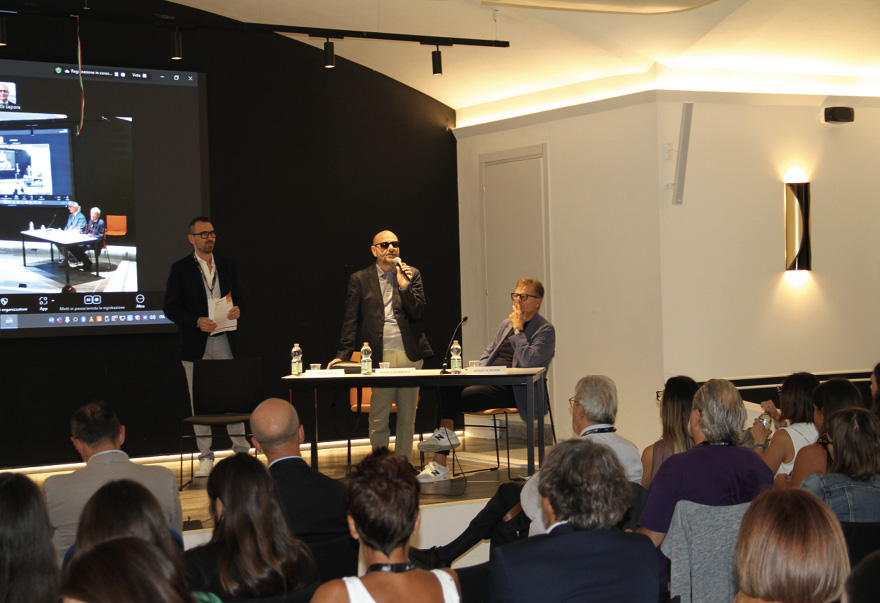
This event – like many others – confirm the role and commitment of the Francesco Cavazza Institute for the Blind in this field.
The conference dealt with many subjects, including training programs and the use of assistive technologies. These are the core services that the Institute provides every day to blind and partially-sighted children and adults, in synergy with local health structures.
The event confirmed the importance of networking, uniting scientific research, clinical experience, and support to families. Only through the collaboration of institutions, professionals, and associations can processes of inclusion and self-sufficiency be constructed, starting from an early age.
 Italiano



.png "Aderente alla Consulta tra le Antiche Istituzioni Bolognesi")