This year, the Parish of Santa Maria Maddalena, Via Zamboni, 47, Bologna, renews its celebration of the 2025 Eucharist Decade, rooted in the history of the Bolognese church in memory of the faith in the Body of the Lord in the Eucharist.
The institution of the holy day dates to the Bull of Pope Urban IV in 1264, which, renewing the 1247 initiative of the Liège diocese, confirmed opposition to the thesis of Berengar of Tours, which denied the holiness of the eucharist and deemed it merely symbolic, especially after the “Miracle of Bolsena,” when blood trickled from a consecrated host onto the corporal of Peter of Prague, a skeptical Bohemian priest, as he was celebrating mass.
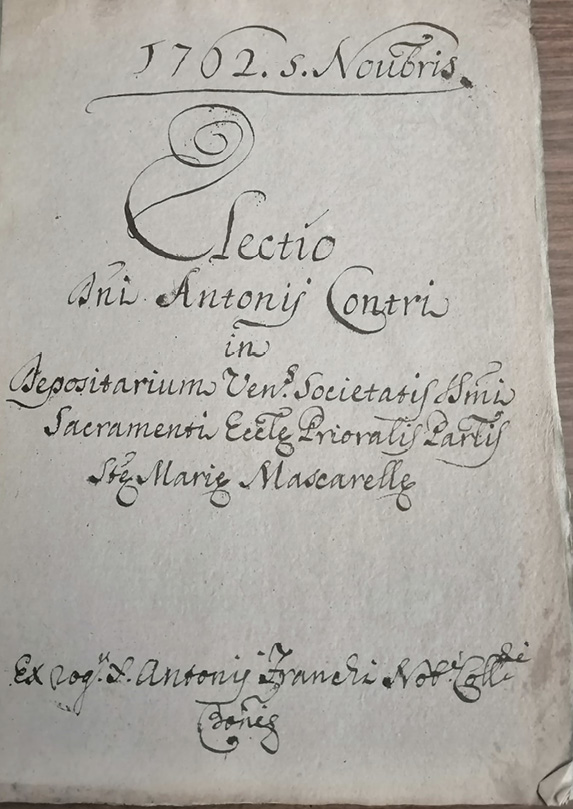
The Bull stated that Corpus Christi should be solemnly celebrated every year on the first Thursday after the Octave of Pentecost, a day confirmed by Clement V in 1314. In 1316, Pope John XXII added a solemn procession to be held in city streets immediately after the morning’s holy mass, to carry Christianity “in triumph,” followed by broad participation of the faithful, associations, and families.
The day is celebrated by decorating the parish streets with flowers, the so-called “flower festival,” especially by those taking part in the procession, who had to be adorned with festive signs of recognition, with drapes and tapestries hanging from the windows and balconies of buildings, a profusion of flowers, and other representations of social gatherings to mark the celebration and participation.
Initially, there was no set turn, but rotated so that each parish could hold its own procession every ten years.
The ten-year rule was established by Girolamo Boncompagni, archbishop of Bologna from 1651 to 1684, who decided that five parishes would be chosen every year. This rule remained unchanged until the Napoleonic occupation in the late 1700s, when many parishes were closed and repurposed, until being reduced to 16 by decree in 1805.
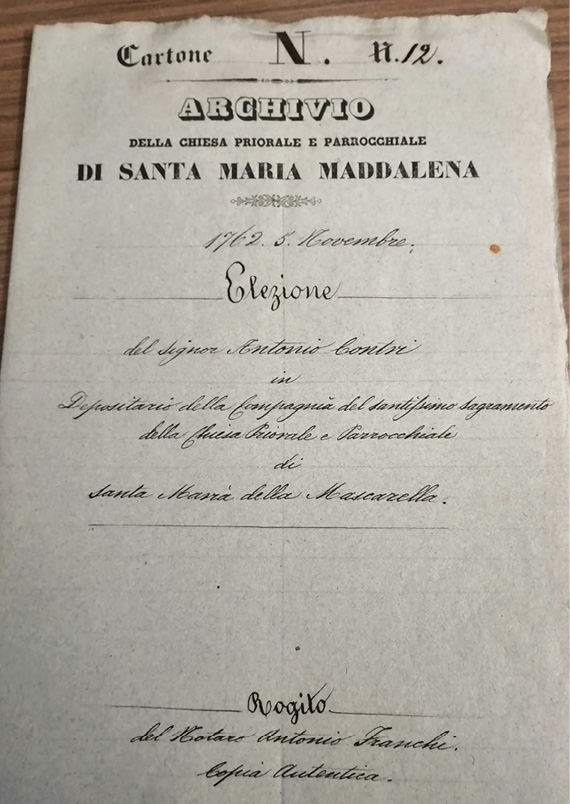
At the end of the French occupation, the priests of the city’s 27 parishes, re-ordered in their function, and at the request of the faithful, requested Cardinal Carlo Oppizzoni to reinstate the Decades and the decorations, which he agreed to do on June 22, 1817.
In 1927, it was decided that the processions would always be held on Sunday, except that of the city-wide procession for Corpus Christi on Thursday. This rule has been maintained with the enlargement of the number of parishes due to expansion of the territory and increased population. The parish of Santa Maria Maddalena renews its Decade in years that end in 5.
The decorations are an integral part of the religious nature of the decade: a tradition that over the years has confirmed the deep and sincere devotion of parishioners to beautify and renew not only the church, but exteriors as well with the refacing of houses, restoration of artworks, display of art with religious themes, donations and charity to the poor, necessary purchases, and much more, without forgetting the offer of rice cake in the entrances of homes, concert bands, and the pealing of the traditional Bolognese double bells.
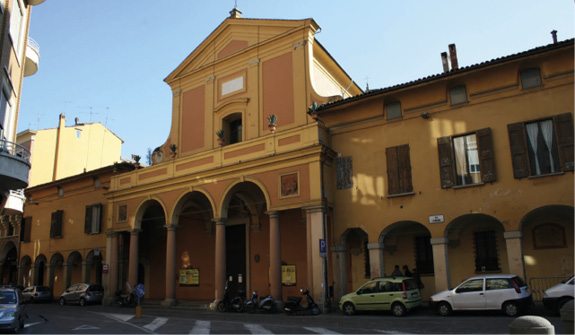
The richness of the decorations demonstrates pride in the “quintessentially Petronian” tradition of affection for one’s parish and active participation in a feeling of renewal that repeats with each celebration of the decades.
 Italiano



.png "Aderente alla Consulta tra le Antiche Istituzioni Bolognesi")