Every story we tell derives from a mix of perceptions, emotions, and thoughts. These can be simply evoked with words, talking about first-person experiences. But for a story to be perceived as truly important, it is essential to make it a global experience: it needs a context, an environment which, based on its setting, lets us participate in the story fully and actively. We shouldn’t just read or listen passively, but instead be invited to touch, move around, take part and interact … to inhabit the story in order to feel its value.
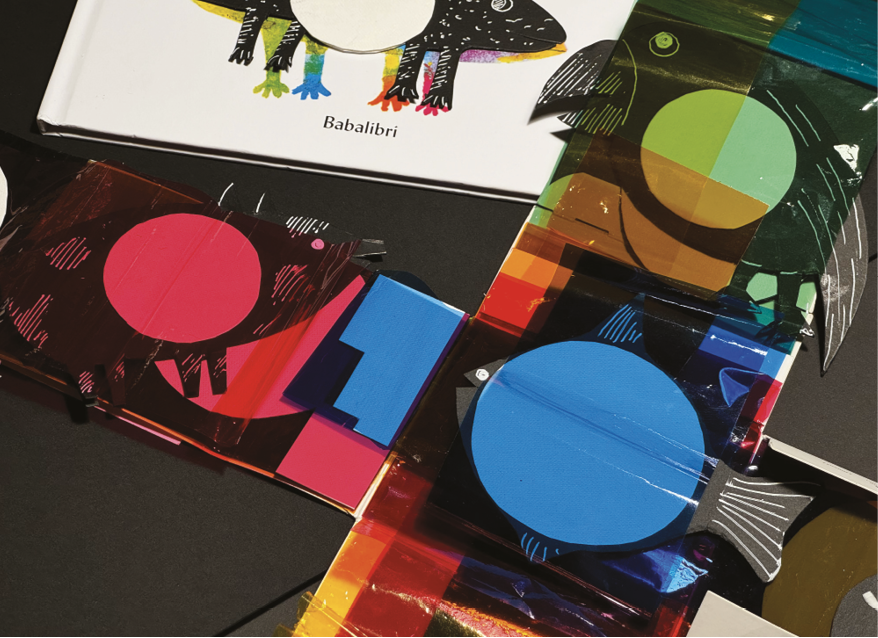
This is the basis of the cognitive and sensory devices we build at the Tolomeo Atelier. They can be museum rooms, like the ones in the Tolomeo Museum, or smaller boxes which, when opened, can fill an entire room with objects, models, actions. After all, the Tolomeo Museum was created to tell a worthy story: that of the Cavazza Institute and other stories about building opportunities for self-reliance. To do this, the Museum is like a Wunderkammer with a spirit of museology based on the rooms of Palazzo Poggi, the museum presenting Aldrovandi’s “Scientific Renaissance.”
Our approach is based on the idea that the ability to tell stories is not just the result of the words we choose, but derives from a cognitive and sensory mix which, together, shape and give form to our experience by recalling emotions. These tool, actual “boxes” full of 3-dimensional contents, are the essence of every important story we design at the Tolomeo Atelier.
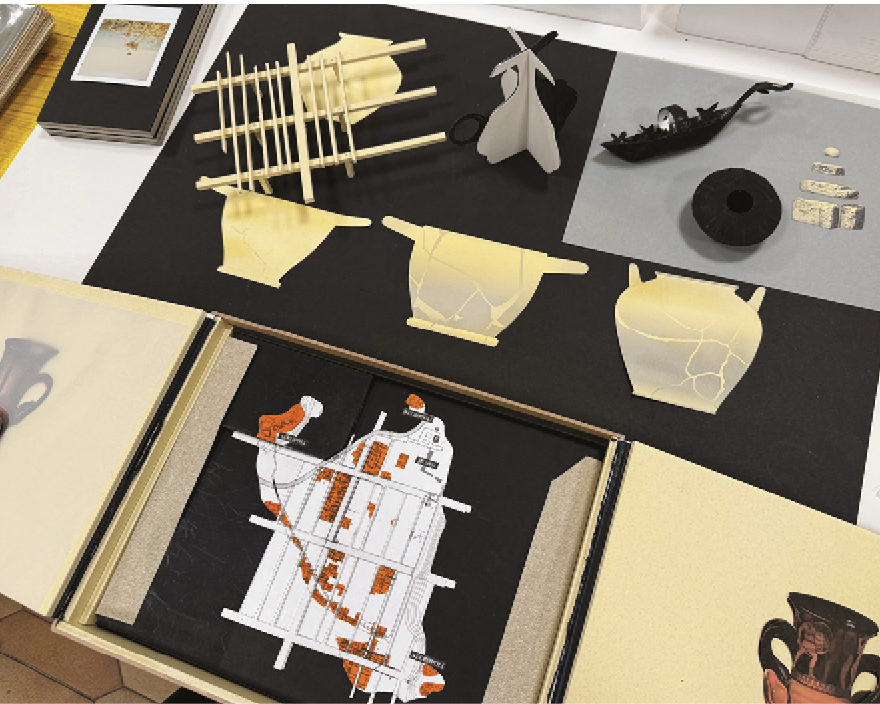
These elements are never flat or simple, but grow in depth and perspective like a kaleidoscope of shapes containing the story. Every gesture we make to interact with the content of these boxes lets us take a step into the story. Every device contains ideas, thoughts, memories, intuitions that become feelings linked to our senses: smells, colors, sounds, touch, tastes. When these boxes are opened, they reveal landscapes that dialog with our inner worlds, landscapes that are never one-dimensional, but that expand into a 3-dimensional space, becoming a scene of experiences, emotions, and complex meanings.
The body is not a passive observer of things that happen before us, but becomes an integral part of the narrative process. The mind thinks, the heart feels, the body works. Think of a situation in which an emotional memory takes us back in time: a sudden memory can make us feel a shiver down the spine, an unexpected pleasure, or a spontaneous smile. This movement, deriving from the connection of thoughts, feelings, and body, is what makes every story exciting and alive, and every experience unique and unrepeatable. Every narration becomes an opportunity to explore not only the external world, but our inner world as well, creating links among what we see, what we feel, and what moves us deeply. The story becomes an experience that lets us learn about the world, discover new nuances, new meanings, and new emotions, with the narration itself becoming a transformative experience.
 Italiano
.jpg "Vedere Oltre - Cover")



.png "Aderente alla Consulta tra le Antiche Istituzioni Bolognesi")