The San Colombano Complex, in the center of Bologna, is of extraordinary historical and cultural importance, offering centuries of art, music, and spirituality.
Founded in the 7th century, it has undergone numerous transformations, absorbing the church, the Chapel of the Madonna dell’Orazione, and the Oratorio, each with important artistic elements. The church, dating back to 616 AD, is on the site of a Roman structure, while the Oratorio, an elegant example of Bolognese baroque, is decorated with frescoes by Carracci’s apprentices, especially Francesco Albani. The Chapel contains a venerated image of the Virgin, the object of popular devotion for centuries.
In 2005, the Fondazione Cassa di Risparmio in Bologna sponsored a careful restoration of the complex, revealing treasures such as the medieval crypt, in which a 13th-century fresco attributed to Giunta Pisano was discovered.
San Colombano is the home of the prestigious Tagliavini Collection, a permanent collection of over 90 antique musical instruments, many of which are playable. Harpsichords, spinets, organs, early pianos: each one represents artisanal mastery and passion for music. Alongside the collection is a music library with about fifteen thousand scores, musicological tests, and recordings.
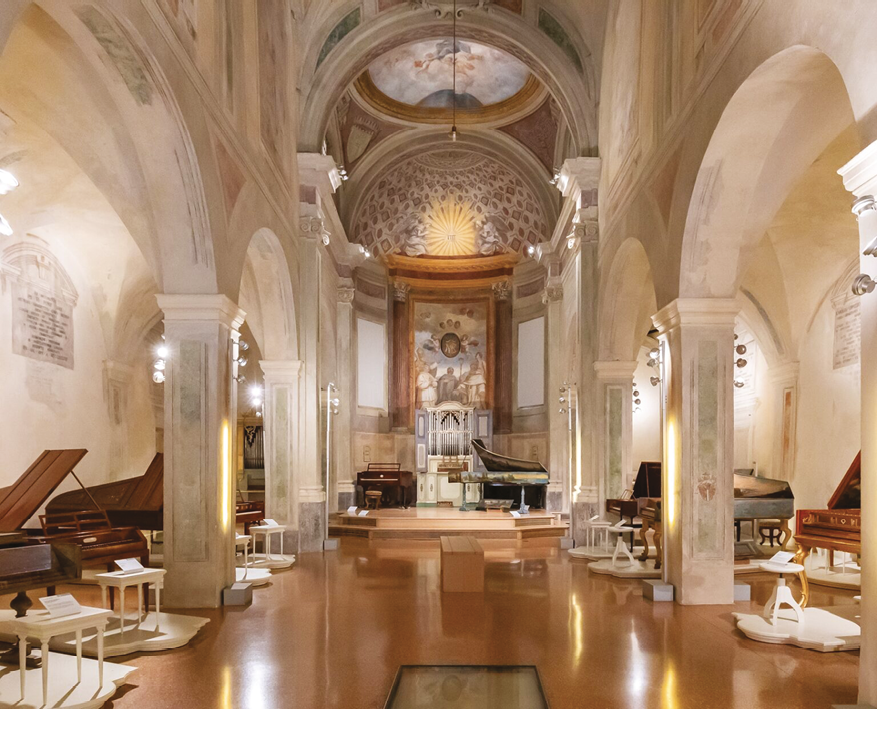
San Colombano, part of the Genus Bononiae – Musei nella Città circuit, is a lively cultural center presenting concerts, conferences, exhibits, and seminars. The circuit also includes Palazzo Fava, the Library of San Giorgio in Poggiale, and the monumental complex of Santa Maria della Vita.
In observance of the principles of accessibility and cultural inclusion, an itinerary has been designed and developed for all categories of users, with special attention to the visually disabled. Our Institute took part in the design of this itinerary by providing technical and methodological expertise.
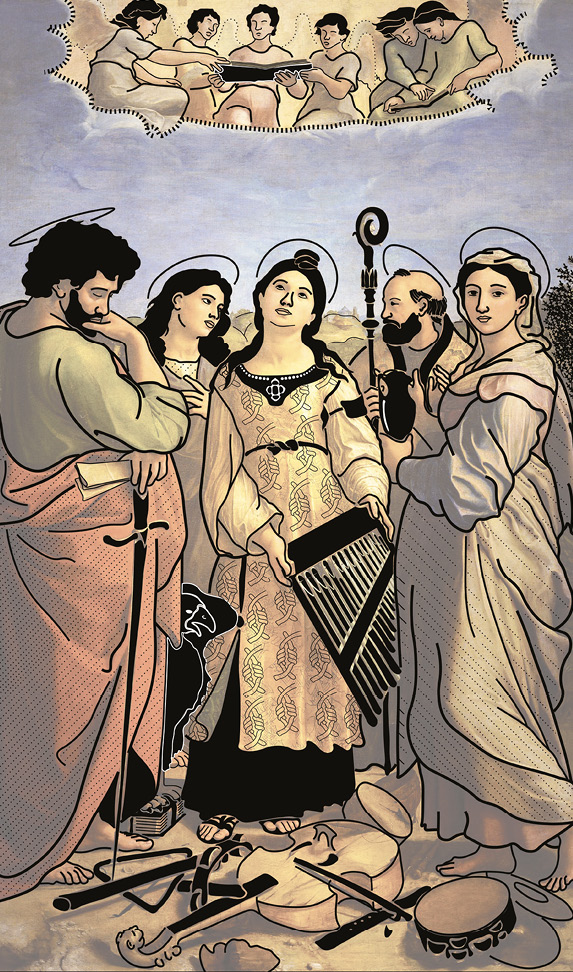
Relief maps identifying the main points of interest were created to help navigate the complex. There are also Minolta 3D reproductions of some key works, including parts of the pictorial cycle of the Triumph and of the Passion of Christ by the Carracci school, the medieval crucifix in the crypt, and the Madonna dell’Orazione.
Of particular importance is the tactile reproduction of Raffael’s Saint Cecilia, the original of which is in Bologna’s National Picture Gallery. The work was chosen due to its iconographic value and for the still life of musical instruments in the foreground, which makes it especially meaningful for the sight-impaired.
The itinerary is made even richer by some tactile models of keyboard instruments, such as a spinet, a harpsichord, and a piano in the Tagliavini Collection, all printed in 3D, which allows perception of their structural and functional differences and provides a direct and multisensory experience.
The Cavazza Institute also promoted training courses for the museum’s staff and guides to ensure appropriate reception and a truly inclusive experience.
This demanding project was made possible by a collaboration between Cavazza and San Colombano, with the generous support of Fondazione Genus Bononiae.
We hope this collaboration is just the start of a long-lasting dialog between our Institute and the Foundation, to ensure that culture is more and more accessible, engaging, and shared.
 Italiano
.jpg "Vedere Oltre - Cover")



.png "Aderente alla Consulta tra le Antiche Istituzioni Bolognesi")