Our Institute participated in creation of the project entitled “Nuovi percorsi di accessibilità online e offline,” promoted by the City of Ravenna.
The initiative, devoted to “Ravenna’s Paleochristian Monuments,” dealt with the subject of accessibility as a continuous, multifaceted process that involves training, tools, communication, and digital environment. It was conducted during 2024 and 2025 with collaboration between public bodies and partners specialized in these activities.
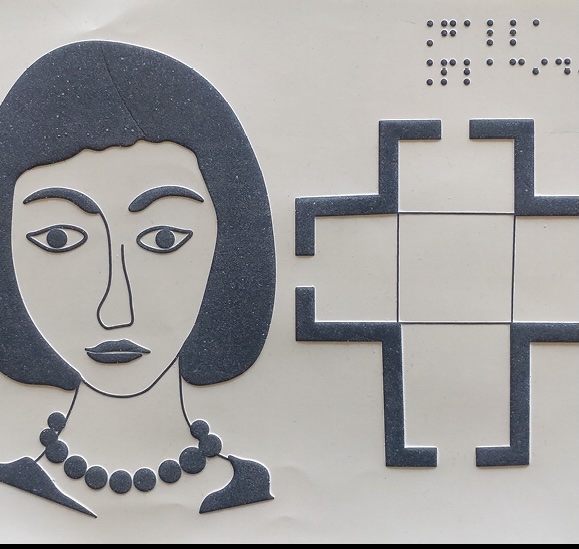
A key element of the project was the training program, designed as the basis for all subsequent actions and organized in modules and addressed to cultural and communication operators, with an approach that integrates sensory, cognitive, and digital accessibility. Our Institute coordinated the training sessions by aligning a variety of responsibilities and involving the Accaparlante Cooperative for cognitive accessibility and the Gualandi Foundation for the hearing-impaired. The RavennAntica Foundation curated a specific program dedicated to people with Alzheimer’s and dementia, expanding the concept of accessibility to include cognitive frailty and ageing.
In addition to the training program, the project created tools for accessible enjoyment of Paleochristian monuments: with architect Fabio Fornasari, eight tactile models were designed and placed into cognitive-sensory boxes, accompanied by maps, facilitated teaching materials, and the dedicated narration “Ravenna. Un mosaico di storie di valore” (“Ravenna: a mosaic of stories”). These tools were utilized in accessible laboratories and guided tours, involving over 400 participants from schools, associations, families, and groups. Project and groups: the project was accompanied by a detailed communication and public feedback campaign, culminating in Accessibility Day on June 12, 2025 at the National Museum of Ravenna.

The accessible laboratories activity, which made the collaborators of ravennacittadelmosaico.it autonomous, integrated with turismo.ra.it, is also well worth mentioning. The project’s participants were able to independently develop the perishable materials in the kit, useful for tactile exploration of the models we created. The cards include the square “Ravenna per tutti”(“Ravenna for everyone”), which contains the accessibility projects designed by local cultural organizations. The project’s final element is now in production: 8 videos in Italian Sign Language devoted to the monuments of the UNESCO site. As a whole, “Nuovi percorsi di accessibilità online e offline” is a pilot project for Ravenna’s cultural sites, based on the idea that accessibility is a shared, constantly evolving process. The project’s participants were able to independently develop the perishable materials in the kit, useful for tactile exploration of the models we created.
The UNESCO site in Ravenna
 Italiano
.jpg "Vedere Oltre - Miniatura di copertina")

.png "Aderente alla Consulta tra le Antiche Istituzioni Bolognesi")