I began to look beyond at a very young age: eyeglasses at 3, hard contact lenses at 14, semi rigid at 20, soft at 20; retinal hemorrhages at 30, cataracts at 50, glaucoma at 60. My ophthalmologist friend says it’s important to see your glass half full, so I try to find what the psychologists call “secondary gain,” i.e., the point of view (maybe it would be more correct to say “point of oversight”) that lets me find positive consequences in living with my disorder. I’ve always been mainly an actor, comedian, and musician. But if I had to think of an “amusing” side to my condition, I confess it wouldn’t be easy. I might tell about the many times a friend came to give me a ride and I got in another car with its motor on; or the many times my professor colleagues (I now teach at a school) say hi and I say hi to them but without knowing who I said it to. For example, being shy certainly made it easier for me not to see audiences at the theater; it would have intimidated me, but instead not seeing gave me a great sense of freedom. I think another advantage is that I constantly have to ask others all sorts of things: “Excuse me, what number bus is arriving?,” “Excuse me, what’s written on this label?;” etc. All this forces me to speak to others, and for a solitary person like me, I think it’s a benefit. As I write, I recall the cartoon I loved as a child: the very nearsighted Mr. Magoo, who unwittingly and continuously gets into serious danger, but whose optimism and luck star always save the day. As if reality were also a bit the way you imagine it.
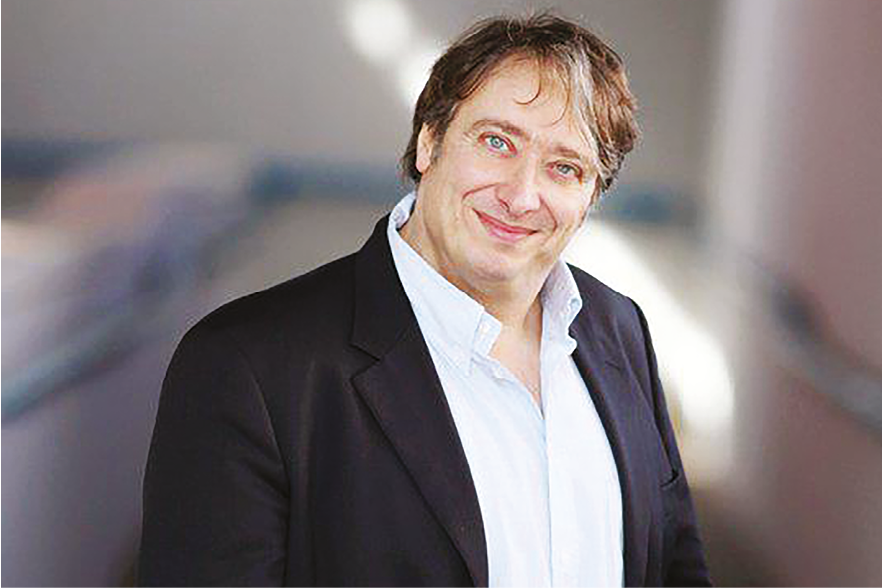
I try to look beyond even though I miss many things: playing ping-pong, running down the stairs, watching a match, driving without a destination, scanning the horizon, seeing faces, smiles from far away, waving hands. I’m also missing 500 words to get to 3000 keystrokes spaces included, but I’m sure you’ll forgive me, nobody’s perfect.
 Italiano

.png "Aderente alla Consulta tra le Antiche Istituzioni Bolognesi")