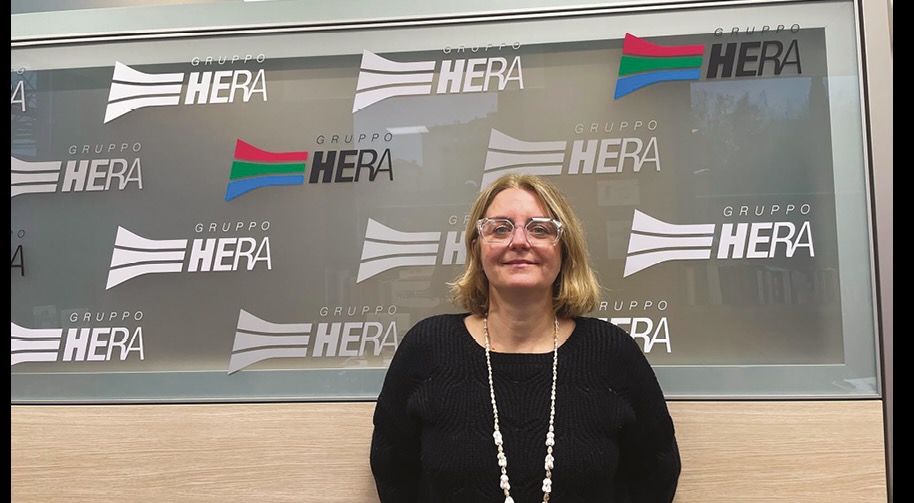
This interview with Giulia Caramaschi, head of internal communications at Gruppo Hera, concludes the series of articles published for the project entitled “A network for inclusion.”
As part of the project entitled “A network for inclusion,” promoting experiences and realities related to inclusion and disability, we interviewed Giulia Caramaschi, head of internal communications at Gruppo Hera.
Gruppo Hera is a nationwide multiutility operating in the energy, environment, and water sectors, with about 10,000 employees and serving about 4 million customers throughout Italy.
Giulia Caramaschi has worked in communications for almost 20 years, presenting the company from the viewpoint of its personnel. Her role is not limited to producing information: it helps build a shared corporate culture by creating relations and opportunities in line with the company’s values.
The interview was conducted by Luca Torrente, project director.
What are your company’s good practices in its support of realities like ours, which focus on disability and inclusion?
Hera is a national company, but it has strong local roots. Inclusion and promotion of diversity are in our DNA. We’ve had diversity management for almost 20 years, working on subjects like parenting support, gender diversity, sexual orientation, age, and disability. This commitment is not just a question of organization. It’s cultural: we want to create a shared corporate culture that values every individual.
What elements do you consider essential for including persons with disabilities in a company and, in general, in society?
First of all, the physical and structural barriers that limit daily life have to be eliminated. For example, at our branches, deaf-mute customers can request a sign language interpreter to speak with operators, including for emergency services. But there are less visible barriers – cultural ones – that are often more insidious. It’s essential to work on stereotypes in order to eliminate them and create inclusive environments where people can demonstrate their abilities as well as possible.
Do you think the Bologna area is sensitive to situations of disability?
Yes, Bologna, and in general Emilia, are particularly sensitive as a result of their strong tradition of association culture that coexists with the business environment. In addition, the stimulating cultural atmosphere generates opportunities for thought, awareness, and integration. Nevertheless, we have to be vigilant and remain focused on eliminating barriers, on cultural inclusion, and on expanding inclusion.
What can Bologna’s business community do to promote the inclusion of people with disabilities?
A great deal. Companies have to feel responsible for shaping the territory, creating value as well as culture. Hera has hired people with disabilities, and we work with organizations (for example, Auticon) that places individuals with autism spectrum disorder to work in IT systems.
We also have solidarity projects, such as Hera Solidale, that involve employees and customers, and support local initiatives with donations and sponsorships.
This is not just a duty: it’s a privilege. Supporting these activities means helping to build an inclusive, safe social fabric, including from a psychological perspective.
 Italiano
.jpg "Vedere Oltre - Miniatura di copertina")

.png "Aderente alla Consulta tra le Antiche Istituzioni Bolognesi")