The previous issue of this magazine presented the activities of the Tolomeo Museum; this article offers an investigation of the concept of space with regard to Augusto Romagnoli and his teachings. His method for teaching the blind focuses, more than on technical training, on the person, everyday life, movement, and collaboration. In this perspective, space isn’t a neutral scene, but an environment of life and time in which bodies form, navigate, and build their personal reality.
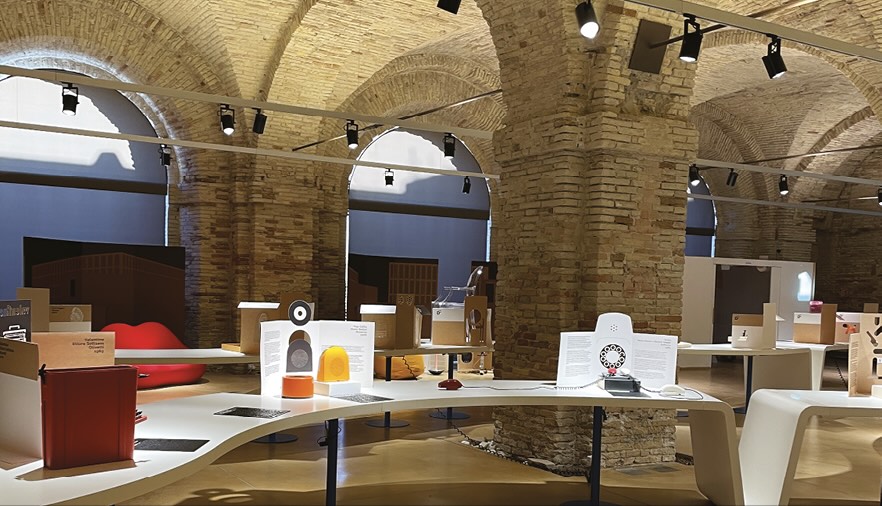
Romagnoli systematically studied movement, sensory-perceptive coordination, and the imagination and character of blind children in order to create a specific teaching method. Likewise, investigating space means observing how the body inhabits it: how it stops, seeks support, listens to an echo, senses differences in temperature, sounds, and textures. Designing a space means considering seriously the viewpoint of people who live in it: there is no “neutral” space, but always a space for someone. This has generated the idea of space as a relational field, i.e., a space that exists only because of the relationships that take place in it. Reality is not given once and for all, but is created from the encounter between sensory experiences and the subject who senses them: a process very similar to the teaching method described by Romagnoli or by Montessori, in which experience comes before meaning.
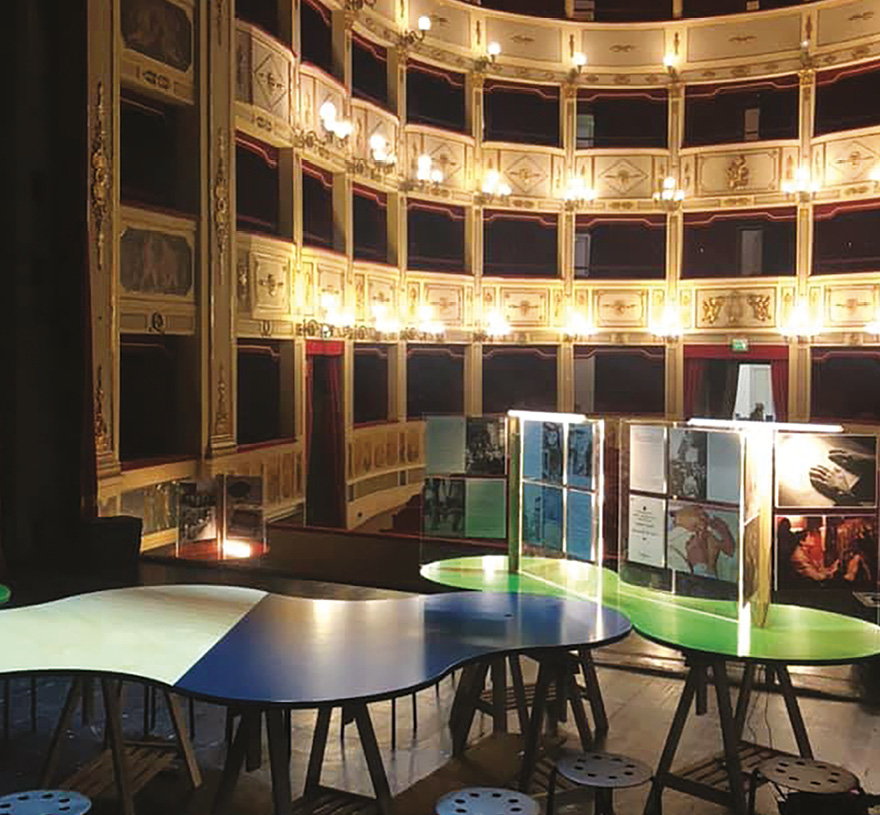
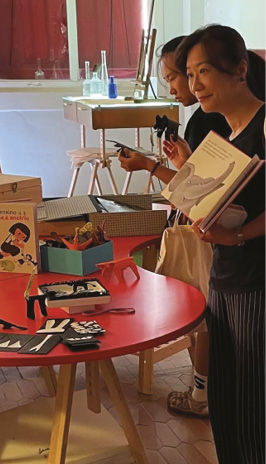
A key element of Romagnoli’s method is teaching the body in space: motor exercises, navigation, play, and exploration are tools for “conquering” the ear. Spatial reality is built in the exploring body, and goes beyond maps or drawings.
Both the Romagnoli method and the spatial approach focusing on experience share the same principle: self-reliance doesn’t derive from overstimulation or from control, but from an environment capable of meaningful relations. Romagnoli aims for a school that “is life” and “counts more on life than on school,” in which everyday situations are the true educational foundation. In the same way, we can design truly inhabitable spaces, in which every body – blind or sighted, child or adult – can move and generate their own personal reality and, at the same time, take part in a shared reality. Therefore, space is not just architecture: it’s an architecture of experience, an education to presence, to listening, and to freedom to navigate the world.
 Italiano
.jpg "Vedere Oltre - Miniatura di copertina")



.png "Aderente alla Consulta tra le Antiche Istituzioni Bolognesi")