“...So also it is with loving, and Love is not in every case noble or worthy of celebration, but only when he impels us to love in a noble manner...” (Plato, Simposium, IV century BC)
Influenced by ancient Greece, the Renaissance culture affirms the idea of Love as the regeneration of being, beauty and goodness together, the Neo-Platonic birth of "Humanitas", nature in the form of "Coincidentia oppositorum" (the coincidence of opposites): the union of spirit and matter. The dual nature of Love, on closer inspection, is a powerful metaphor for the dual nature of the instinct and cognition of Love, expressed in a penetrating manner in Botticelli’s allegories, genuine narratives offered to the observer as a philosophical treatise of complex decipherment, and representations for images of a timeless, yet imagined, symbolic message. In classicism, as in Renaissance, Love is the interpenetration of sensory and intellectual experience, of sentiment and spirit, but the path that leads to this outcome implies a sense of awareness, an intuition about what is true, good and just.
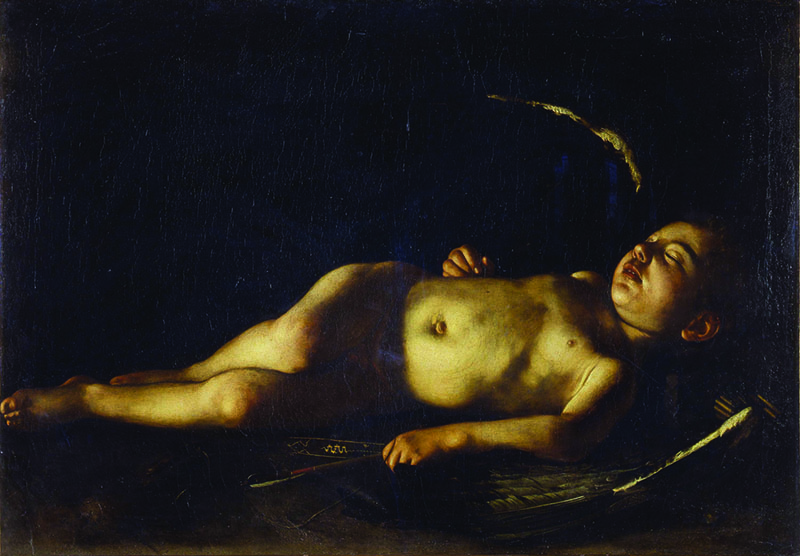 An existential and metaphysical journey is offered to man, that is both experiential and interior, and this requires the experience of Love, of a sensitive and gnostic nature. In this regard, it is worth to know, albeit in summary, the reasons for the existence of as many as five forms of Love describing the metamorphosis of sentiments and states of being. Let us begin with the minor deity Pothos, a lyrical representation of amorous desire, yearning for the perfection of the sentiment. In the Roman copies there is of the Greek statuary, Pothos is portrayed as one who, as in a dream, looks to the sky, immersing himself in the hope of a reunion with a distant Love. It must be said that in this expression of amorous desire there is no sensory urge as an end in itself, rather an aspiration, a sentiment, a longing for something that is forever gone and lost or that we are afraid of losing and would like to find again. Pothos is therefore the intimate and dreamy God, who, while in the present, is shown in an elsewhere.
Himeros is instead the representation of momentary passion, present and immature physical craving needing to be immediately satisfied. Liseros would be the force that extinguishes impulsive Love. In some interpretations, he is identified with a feminine force that counteracts the masculine vehemence, but the complexity of the relationship between the forms of Love, and their transposition to the levels of human consciousness is such that it requires us to avoid diminishing the meaning of these mythographies. Liseros could be considered the symbol of everything that, existing in nature and destined for extinction, is born anew.
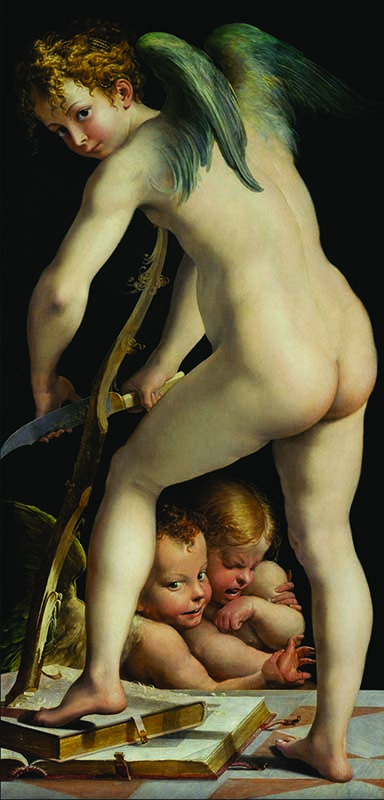 Eros is the life force par excellence, the God of physical Love, leading with passion and reaching a goal, such as beauty. Eros, the God who inspires and leads, is always supported by motivation, passion and eagerness. However, Eros is the uncontrollable desire, a vision later spiritualized by Greek lyric poets, from the VII and VI centuries BC, without any change the cruel and insuperable characteristics of God.
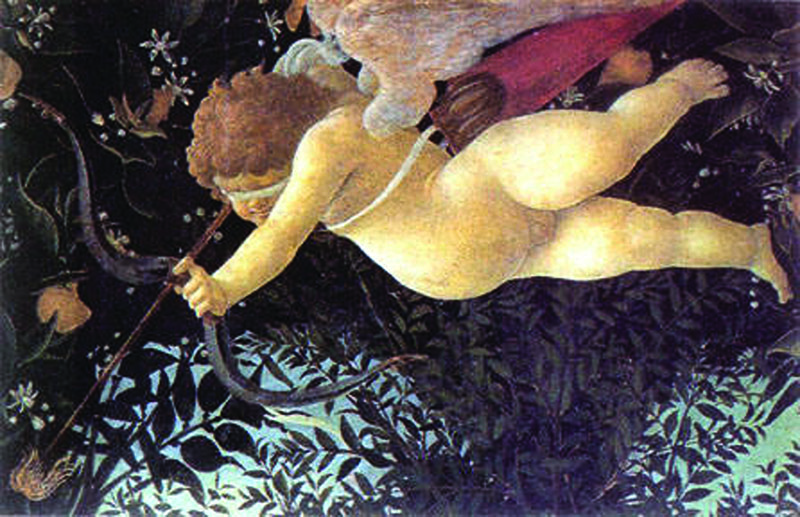
Eros then, suddenly manifesting himself, acting in a confused and even dismal manner with his victims, and because of this, from the Middle Ages on, he will be represented blindfolded to accentuate how blind Love can be a source of unconditional dedication, but also of doom. The blindness of Eros, mentioned in classical literature, but iconographically represented in visual arts only from the fourteenth century onwards, should be understood in the implications of surprise and of the unknown to the idea of constructive and destructive force of sensual Love: a dimension rich of vital energy in risk of danger. What is described of Eros in the classical theogonies will undergo such an amazing transformation through the works of Plato that in the Symposium dialogue he will explain how exactly Eros represents the search for completeness determined by the loving force and the many ploys lovers will try in order to achieve their goals. In a profound and poignant examination, Plato illustrates how Eros is at the beginning of every cognitive process, requiring to go through the tumultuous experience of Love, transforming the sentiment, and finally transcending it, without illusions, without illusions. It seems that this is the path of life, between possession and renunciation of attachments, ownership and restitution of oneself.
 Anteros is mutual Love, Love in a relationship: inseparable brother of Eros, he is the one that allows growth and development. Moralized in the iconography of late Renaissance and Baroque art, Anteros is the one who steals Cupid/Ero’s weapons to avoid disastrous unions, ties him to a column or a tree to restrain his impetuous nature. In the broader and more authentic vision of classical derivation, Anteros is rather the synthesis of all the Love metamorphoses that we experience, from knowing the act of Love to becoming conscious of the essence of Love. Anteros is ultimately the goal to which all beings endowed with a soul and a body ideally tend to: between sentiment and reason, experience and hope.
 Italiano



.png "Aderente alla Consulta tra le Antiche Istituzioni Bolognesi")