|
The Philharmonic Academy by Maria Chiara Mazzi Founded in Bologna in 1666 it welcomed musicians from all over Europe.
| |
|
Between the sixteenth
and the seventeenth centuries in Italy, Academies were flourishing,
particularly "cultural organizations" found in noble villas, supported by
their owners who reunited men of culture, experts in various scientific
and classical disciplines, men of letters, artists, musicians. Meetings
were often not limited to debating the more interesting problems of the
time. New aesthetic theories were
also elaborated: for example, in Bardi's Circle, in Florence (at the end
of the sixteenth century), the theoretical and practical foundation of the
first operas was laid, and the Arcadia Academy, in Rome (at the end of the
seventeenth century), gave rise to the aesthetic movement, a fundamental
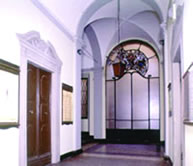
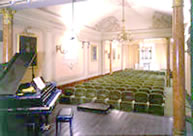
passage between the Baroque and Enlightenment ages. Even in Bologna, in the course of that century, numerous Academies were created (Floridi, Filomusi, Intronati, etc.), among which the only one still enjoying extraordinary vitality today is the Philharmonic Academy, founded in 1666 by the noble Vincenzo Maria Carrati in the same villa on Via Guerrazzi where it is still today. It was created with the goal to gather professional musicians to "stay together and create good music". At the beginning of the eighteenth century, the fellowship obtained the assent of the Pope himself and, because of this protection, obtained the control of the production of sacred music everywhere in the Papal State, from the moment when it was necessary to pass the examination of the academy in order to exercise the profession of master of the chapel. From then on the Academy gained in notoriety and numerous European musicians asked to be aggregated into one of those classes organized by the fellowship (composers, singers and musicians) and its fame took international proportions thanks to Father Martini who, in the second half of the eighteenth century, became a reference point for musicians all over Europe. Famous people joined the Academy such as Farinelli and Mozart (the concert hall was named after him) who joined the master composer on October 9, 1770. The Philharmonic School was established in 1804, and the Academy was responsible for evaluating the professional capacity of teachers. But in the nineteenth century, the conditions of music production and consumption having changed, the aggregation into the Academy was not considered an essential prerequisite for the musical profession, though remaining a motive for pride in everyone's curriculum. In that century there were honourary aggregation of famous names (among others Rossini, Paer, Verdi, Boito, Brahms, Wagner, Puccini). The long story of the fellowship and the fact that every aggregated musician had to send a copy of their own compositions, allowed the creation of a very important library and precious archives available for consultation still today. At the present time, the Academy offers concerts, conferences, self-betterment courses, music conventions, and it is a reference point of the Mozart orchestra, as Claudio Abbado wanted it, to celebrate in real terms the Mozart year. |
|